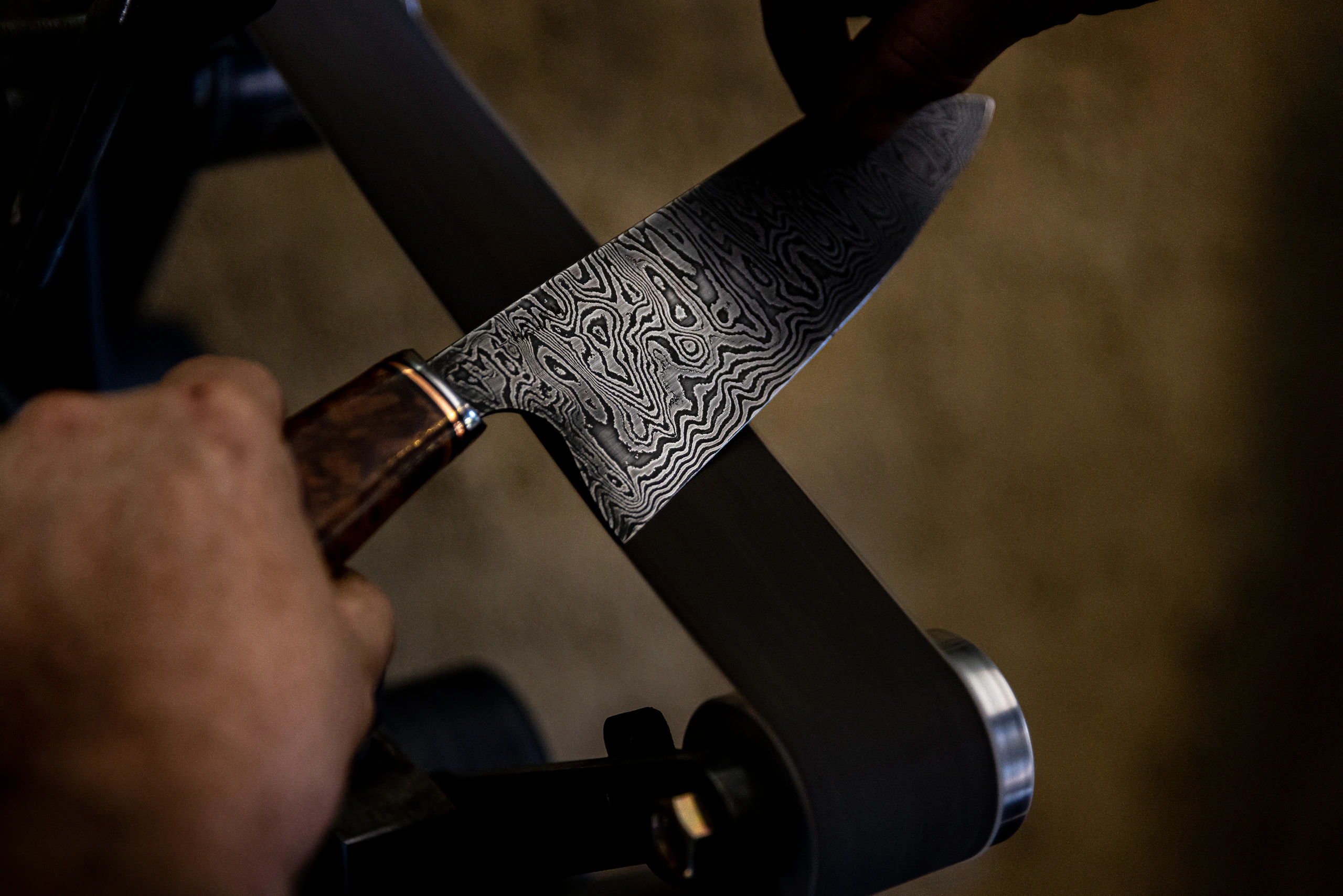
Fourteen years is long enough for anyone to become intimately aware of the shortcomings of any tool. For Sam Heath, a lifetime in professional kitchens had shown him exactly how professional knives fall short of their mark.
For an inveterate tinkerer and maker-of-things, Sam took to smithing kitchen knives the moment he hung up the professional apron. His first attempt, in his words, ended in a "knife shaped object" that he made using mild steel and an angle grinder. "The first knife shaped object I made was as crude as it gets," Sam tells the Atlas. "Once I did finish it I knew I could do better, then the buying of tools began and I was hooked."
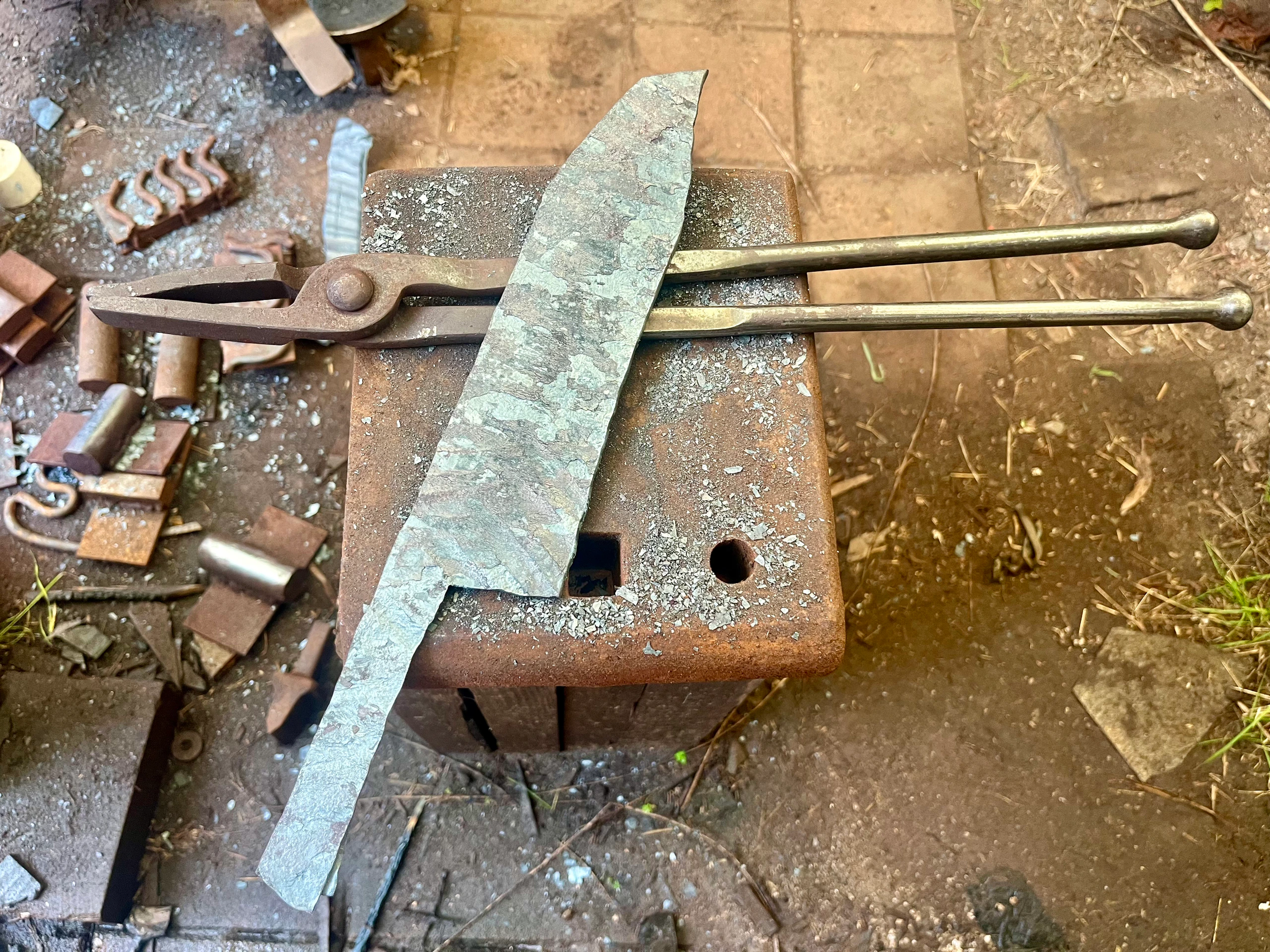
Sam had always baulked at the price of custom knives throughout his career, and now he had the opportunity to rival them. The plan, if there was one, was to undercut them. What he found, after hard trial and error, was that the price of custom knives was honest. "Once I started making my own knives I realised the cost of custom knives is truly justified," he says. "I would have saved a heap of money if I had just saved up and bought a custom." The saving never really came. What came instead was a set of standards he would spend years trying to meet.
The rule Sam set himself was absolute: fifty knives before he sold one. The first few went to chef friends for feedback. "I didn't want to be selling my mistakes," he says, "and I was in no rush to sell." He still has the rest in a box.
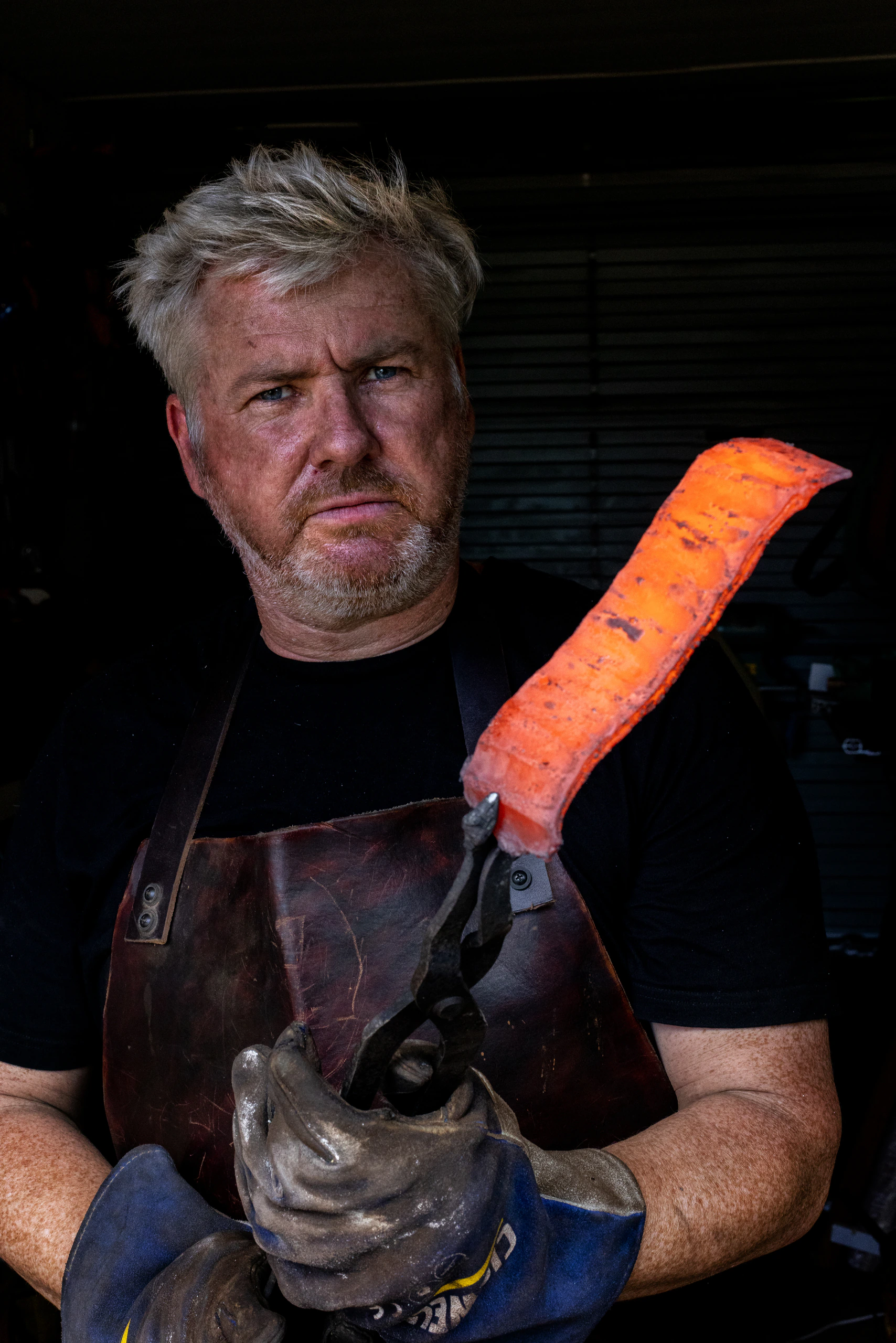
Eighteen months in, Sam decided to make his way to Western Australia to study under Bridgetown-based bladesmith Bruce Barnett. He was not a beginner. He did the beginners' course anyway. "Bruce really straightened me out and taught me the fundamentals," he says. Barnett, by Sam's reckoning, is one of the finest knife makers in the world. Sam flew back to Adelaide with renewed vigour to take to the smithy.
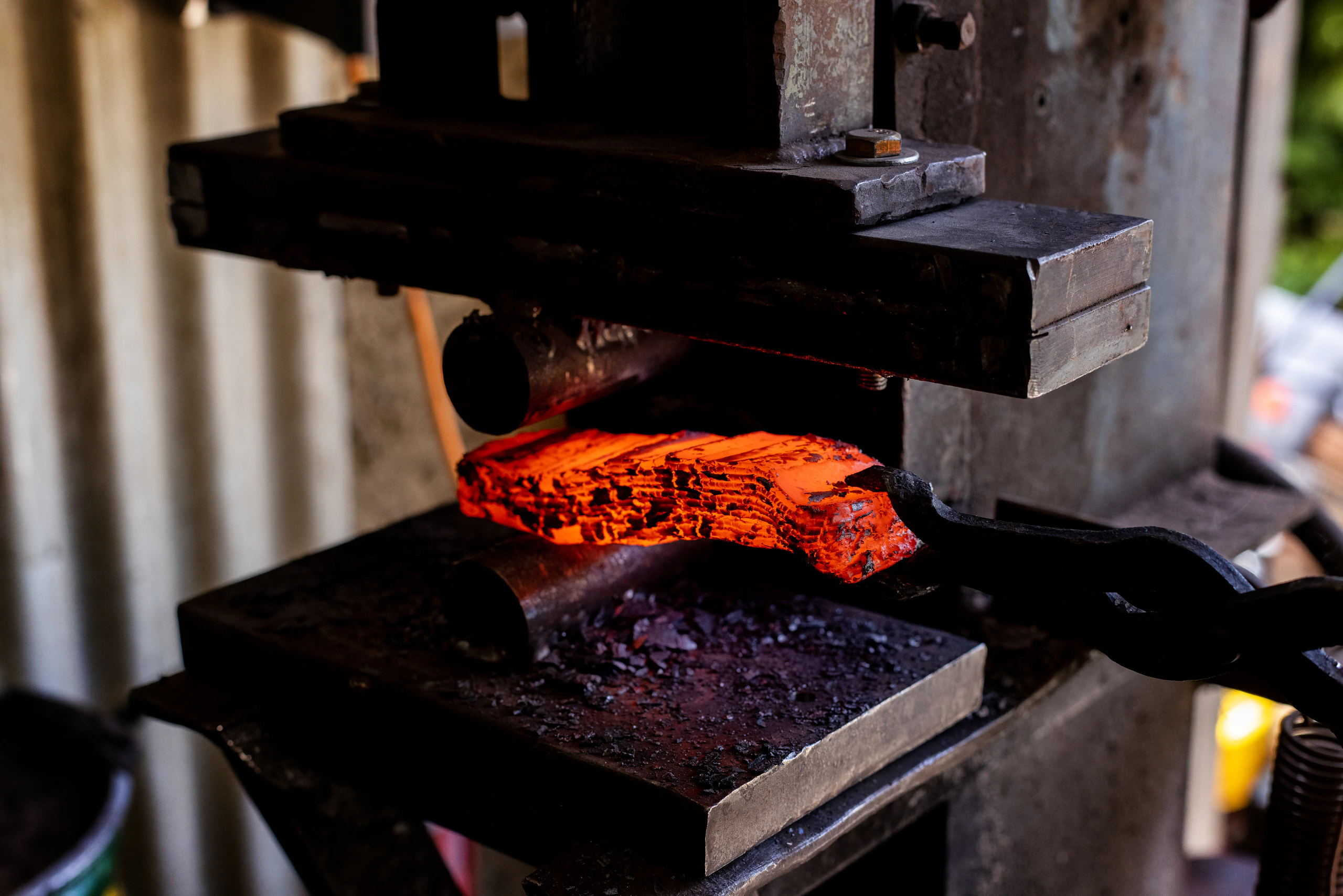
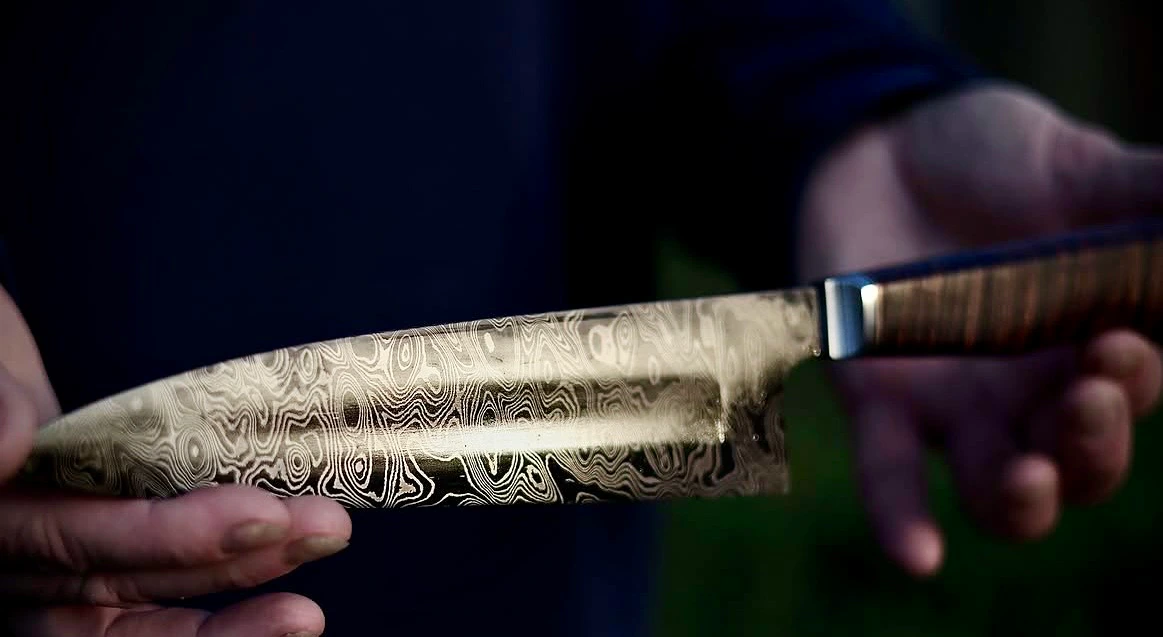
Sam is a man who does not do things in a straightforward manner. So it is no surprise that he is pulled towards the intricacy and, at times, maddening difficulty of Damascus steel. Twenty layers of two carbon steels – 15N20 and 1084 – stacked, forge-welded and drawn out under a hydraulic press, then cut into four and re-stacked and drawn out again. The pattern is the by-product of that intensive repetition. From there it's hammers, heat and grinding until the blemishes are gone. Finally, the blade is dipped in ferric acid, where the Damascus patterns emerge to show the final form and look of the blade.
By way of his unorthodox approach it is perhaps entirely unsurprising that Sam holds to no singular tradition of knife making. "I make mostly the kind of knives that I enjoy," he says, "which are Damascus kitchen knives that blend Japanese blade shape with Western handles."
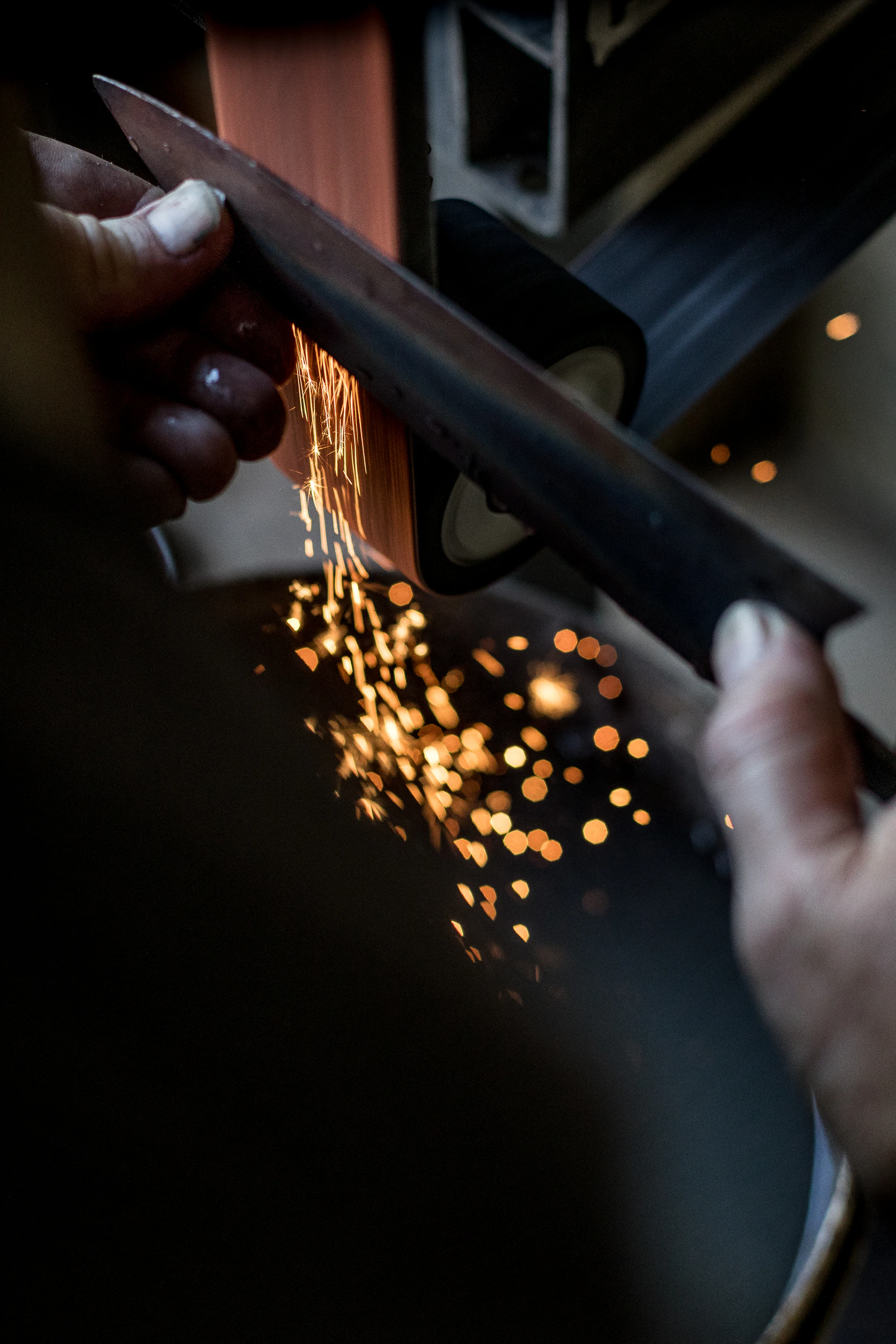
The handle comes last; it is the only part of the process that can't be undone. A bolster, a block of timber – Australian where he can source it – epoxied and shaped on the belt grinder. He knows precisely what he is after. "Working with a knife in your hand all day I want it to be light with a comfortable handle," he says. Fourteen years of holding other people's knives has made him an excellent judge of a knife's character. Three days of work are already in the blade by this point, and he is careful how he approaches the final stage: "You can grind the timber off, but you can't put it back," he says.
Nowadays, his customers are mostly home cooks. A lot of knives are bought as gifts; a few sell through his website and Instagram, but most change hands in person. He takes custom orders when they're the sort of thing he already makes. "If you are chasing a post-apocalyptic Zombie Slayer," he says, "I'm not your guy, but then again…"
Sam still cooks, just not for a living – mostly for his family. He happily works in construction full time and makes the knives in whatever free time he has between work and family. "Honestly, I don't see myself ever being a full-time knife maker. I would hate to ruin something I love by depending on it to pay the bills." There are frying pans and steel spatulas he'd like to get to one day, and a box full of half-finished knives he could still work on. But whatever comes, the standard stays the same. A home forge and an angle grinder: "You can have a beautiful piece of steel but if it cuts like a chisel it's just a knife-shaped object."
A special thank you to Mark Piovesan Photography for images provided.