
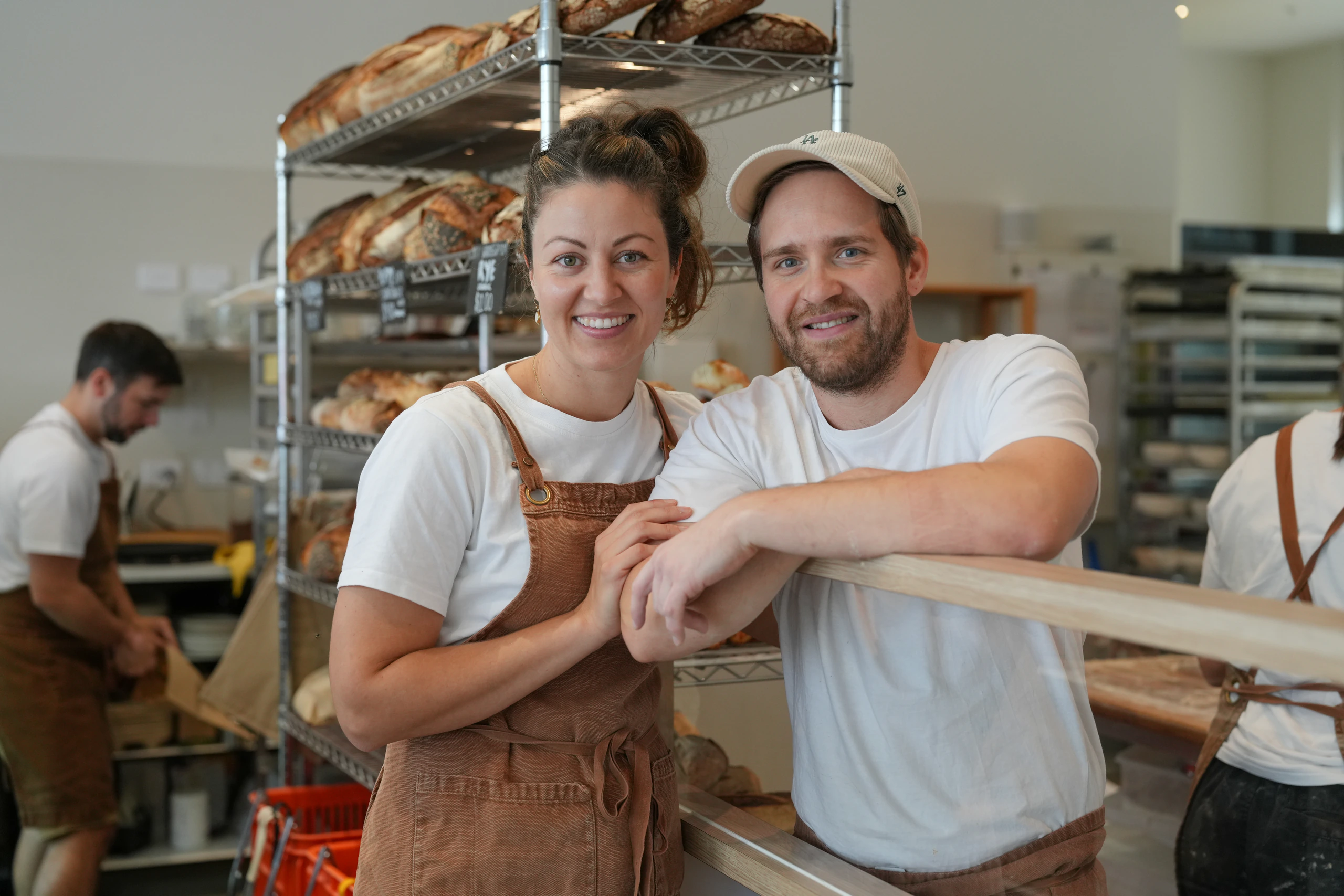
An hour south of Melbourne, where the hills above Port Phillip Bay begin to wrinkle into vineyards, sits the town of Mount Eliza, where behind a full length glass wall Butterken Bakery has been administering a quiet re-education in all things bread. Anita and Hendrik, she a local, and he by way of a Berlin bakery, have spent nearly four years persuading anyone lucky enough to walk through their doors that there is more to life than baguettes and croissants.
Butterken opened its doors in November of 2022, with just Anita and Hendrik mixing, shaping and baking everything by hand. Nearly four years on and the team has grown to over twenty, with shelves stacked with things that most Australian bakeries have never attempted to stock: naturally fermented ryes, wholegrain spelt loaves, hand-rolled pretzels dipped in lye.
The idea formed five years before they opened, in Berlin where Hendrik and Anita had moved. Hendrik had studied biochemistry, but had since worked at an artisan bakery where he had grown fascinated by the science, discipline and creativity in making bread.
"Within his first week, he came home and said: 'I think I want to open a bakery with you,'" Anita says. "That simple sentence became the beginning of Butterken."
What followed was several years of planning, saving, and working through the Australian visa process before they could bring their idea to life.
It might be a little difficult for an Australian reader to properly comprehend the importance of bread in the German psyche. In Germany, the evening meal is often referred to as Abendbrot, or 'evening bread'. It is not a meal that happens to include bread, but a meal named after it: cold cuts, something pickled, cheese, all of it arriving on a slice. Bread is not a thing served with dinner. It is dinner.
Bread, done well, should take time. The first few years, Hendrik says, were spent teaching it.
"It has been a real journey of re-education for our customers, learning that darker breads still taste great as sandwiches and in their daily life."
But for a good many of the locals, Butterken is a window back into their childhood. The deep aroma of rye, or a sticky sweet apfelstreusel, is a homecoming for many living on the Peninsula.
"We also have a lot of Europeans living on The Mornington Peninsula, so providing them with something that tastes like home has served us well," says Hendrik.
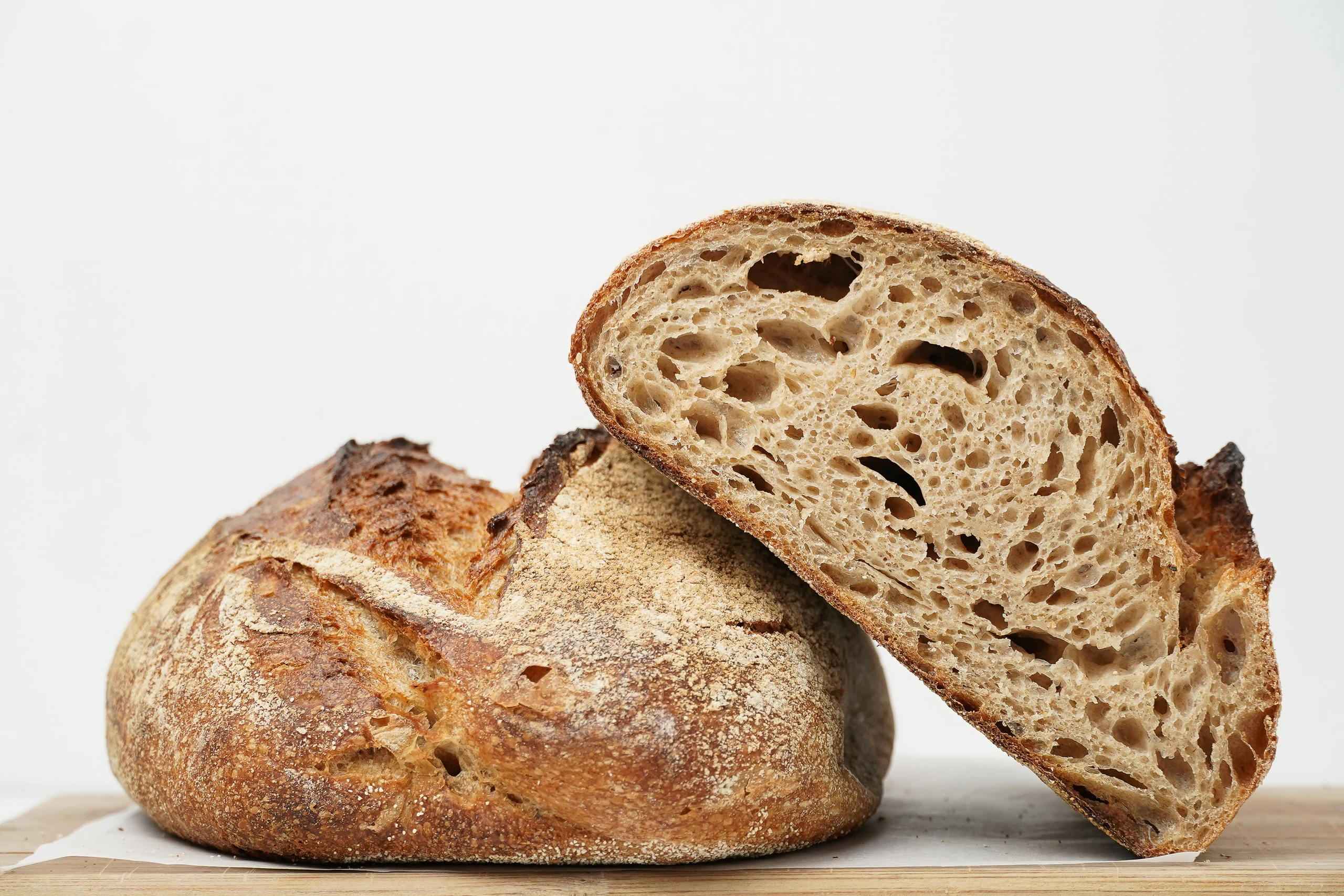
Rye features so prominently on the shelves at Butterken for a plain agricultural reason. Rye, unlike its more finicky relative wheat, will grow comfortably in the cold and often unreliable climate of Germany.
Historical connections or not, rye remains a far more demanding bread to make. Wheat gives you gluten, and gluten gives you something to work with: stretch it, knead it, and the dough builds its own structure. Rye offers almost none of that. There is nothing to push against.
"Unlike wheat, rye contains very little gluten, so you can't rely on gluten development to create structure," says Hendrik. "Instead, everything depends on fermentation, acidity, hydration and timing."
Hendrik revels in countering the stereotypes around rye: that it's tough and dense.
"It should be beautifully moist, full of flavour and actually improve over the day or two after it's baked," says Hendrik. "Because it's naturally fermented over 24 to 48 hours, the flavour becomes more complex while also improving digestibility."
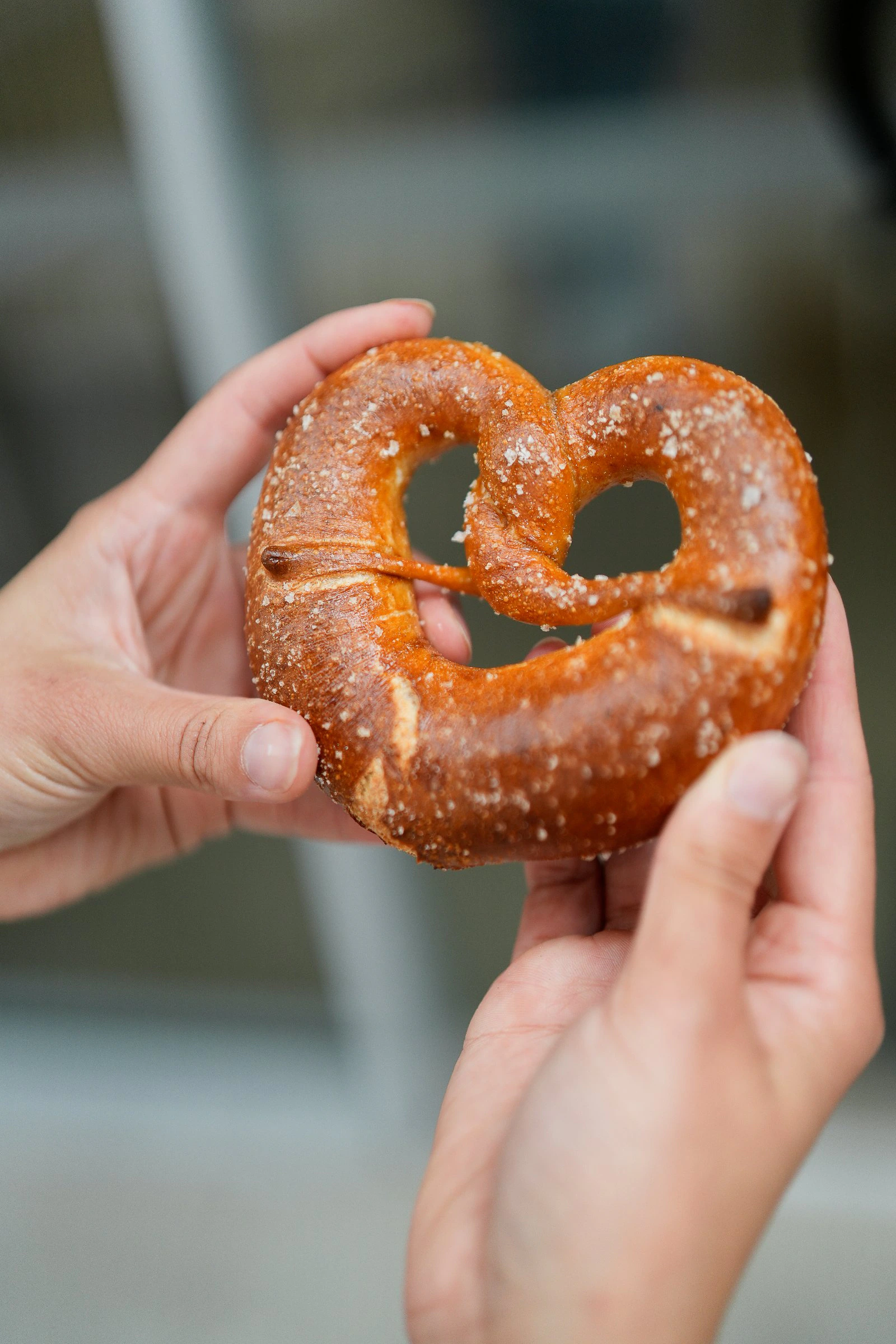
The pretzel is perhaps where Butterken enjoys its most visible connection to its Germanic roots. Anita and Hendrik relish the methodical processes. The proofing has to be precise, the pretzel dipped in a bath of lye before baking to deliver the unmistakable, crackly crust that German pretzels are known for. Hendrik, ever the biochemist, assures us that any chemical residue evaporates in the hot oven.
It took them years to get there, and by Hendrik's account they are not finished.
"Even today, we're always looking for small improvements," he says. "Artisan baking is a craft. You're never truly finished learning."
Which brings us to the titular Wednesday. Every great bakery, Anita and Hendrik remind us, has to have a tradition, and what better tradition than the Dinnele? A thin sheet of the bakery's salt roll dough, generously topped with potato, onion, cheese and a dollop of crème fraîche. Anita and Hendrik describe it as Germany's answer to pizza, but it is, very convincingly, its own thing.
The Dinnele is a story in itself. It began as a castoff on Swabian farms, back when households baked their own bread. A wood-fired oven would have to fall from its firing temperature before loaves could safely go in. In that waiting gap, offcuts of the dough would be dressed with whatever ingredients were at hand and baked quickly, feeding the farmer and whoever had come to help that day. It was the thing you made while the oven was too hot to make the thing you wanted.
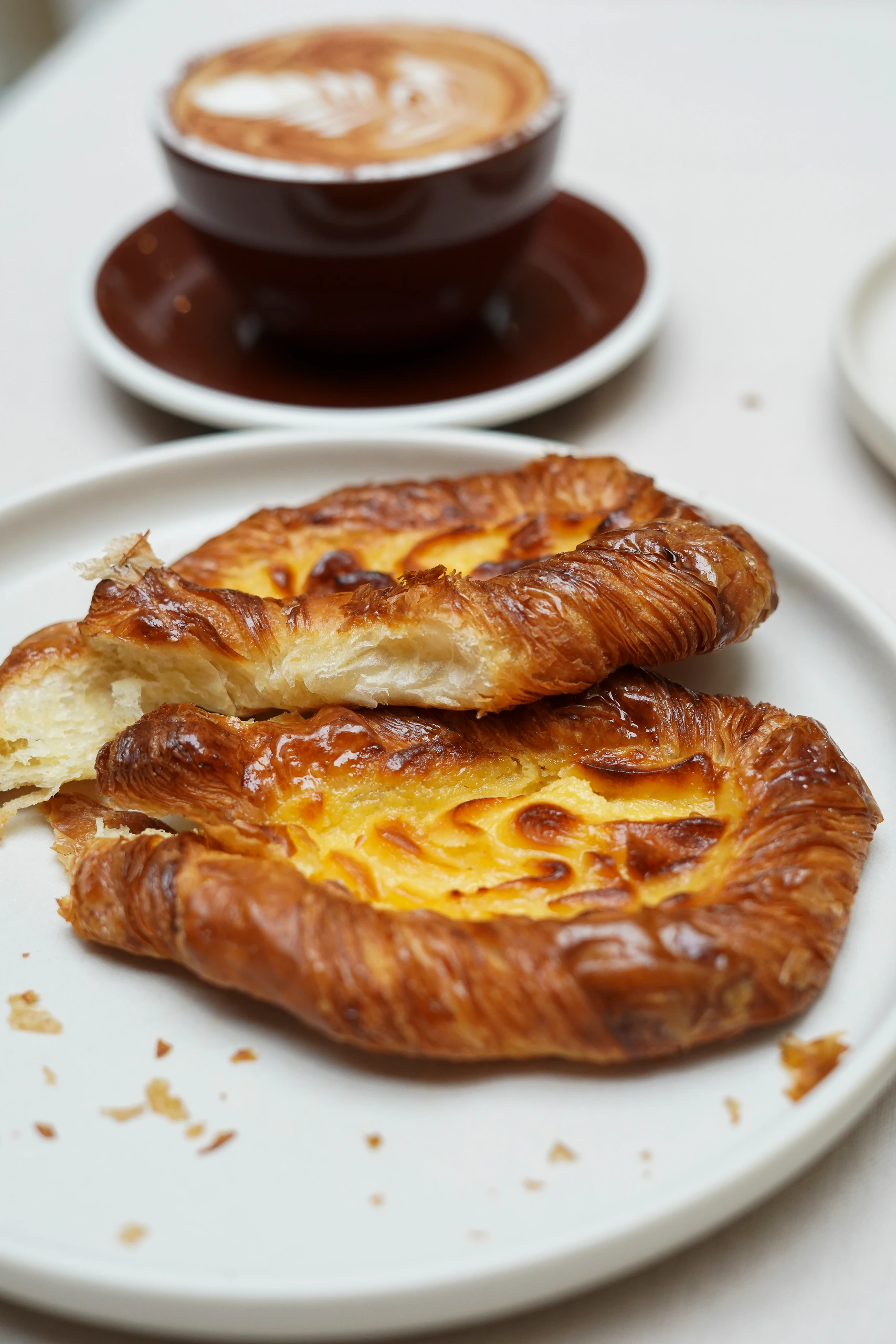
At Butterken it runs weekly, and by design rather than accident.
"We only make it on Wednesdays because we love creating traditions within our own bakery," Hendrik says. "Whether it's a special loaf only baked on Saturdays or Dinnele Wednesdays, those traditions become something people look forward to and share with family and friends."
The full glass wall that defines the interior of the bakery is not decorative. Behind it, through the working day, bakers shape and mix, hand-roll pretzels and load ovens, and on the other side people stop to watch. Children press up against it, adults ask about sourdough, fermentation, about grains they might never have tried before. It is the bakery's soul made visible.
"If we're asking people to trust what goes into their food, we believe they should be able to see exactly how it's made," Hendrik says. "It's not something to hide behind a wall. It's something worth sharing."
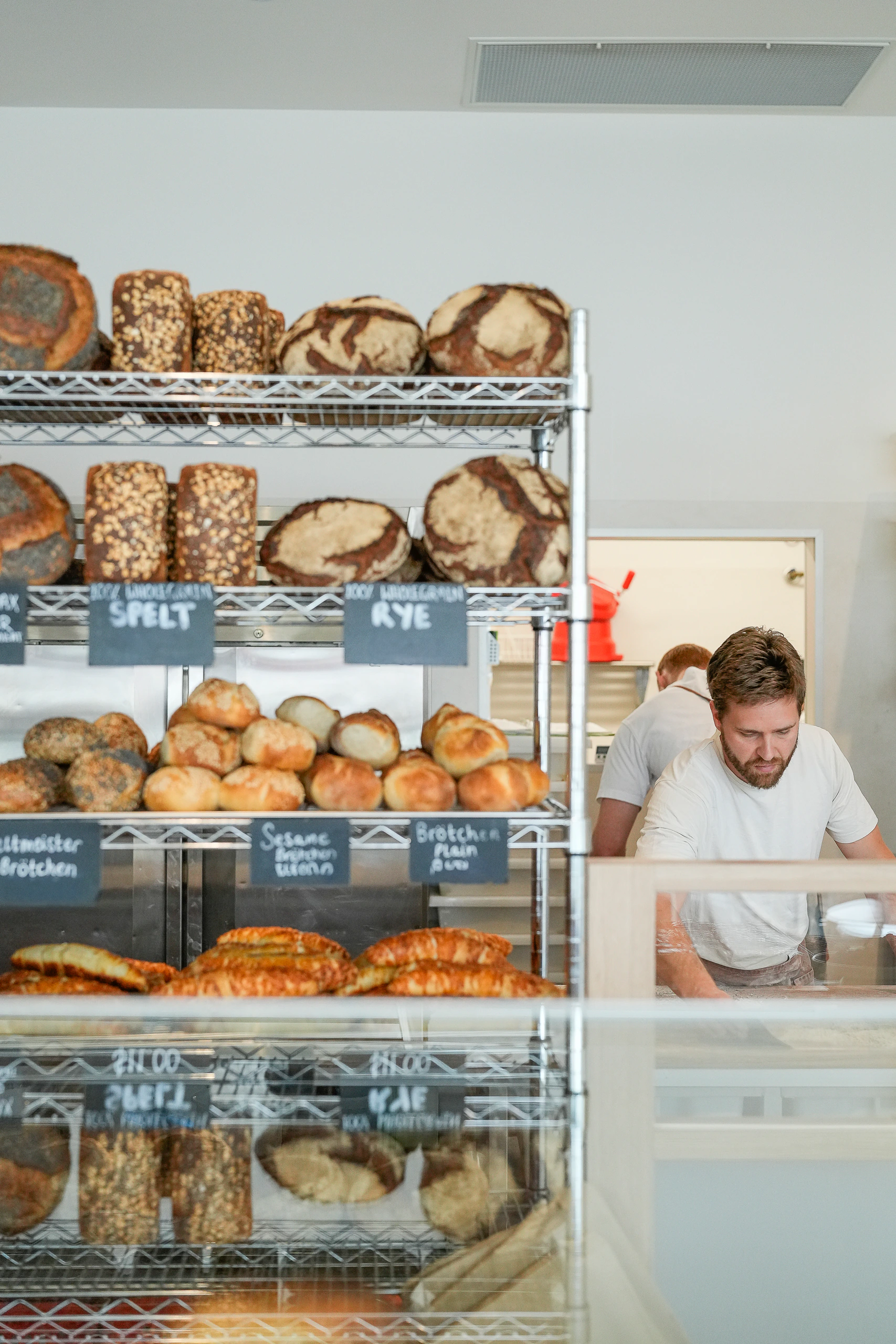
Two people opened this bakery. There are now more than twenty, and every new baker who joins becomes part of preserving and sharing a craft that has grown increasingly rare. They are taught to respect the dough, to understand fermentation and to pay attention to every detail.
"Time is one of the most important ingredients," says Hendrik.
What comes next is more of it. Anita and Hendrik want to keep going, across Victoria if they can, introducing more Australians to a bread culture that most have never encountered. Which raises the obvious question about a bakery whose entire proposition is doing it slow, and doing it well.
"Growth is exciting," says Hendrik. "But growth only matters if quality grows with it."
In the meantime, there is Wednesday. The oven comes down, the dough gets dressed, and Mount Eliza queues up.